DrupalCon Rotterdam 2026: my takeaways
· 4 min read

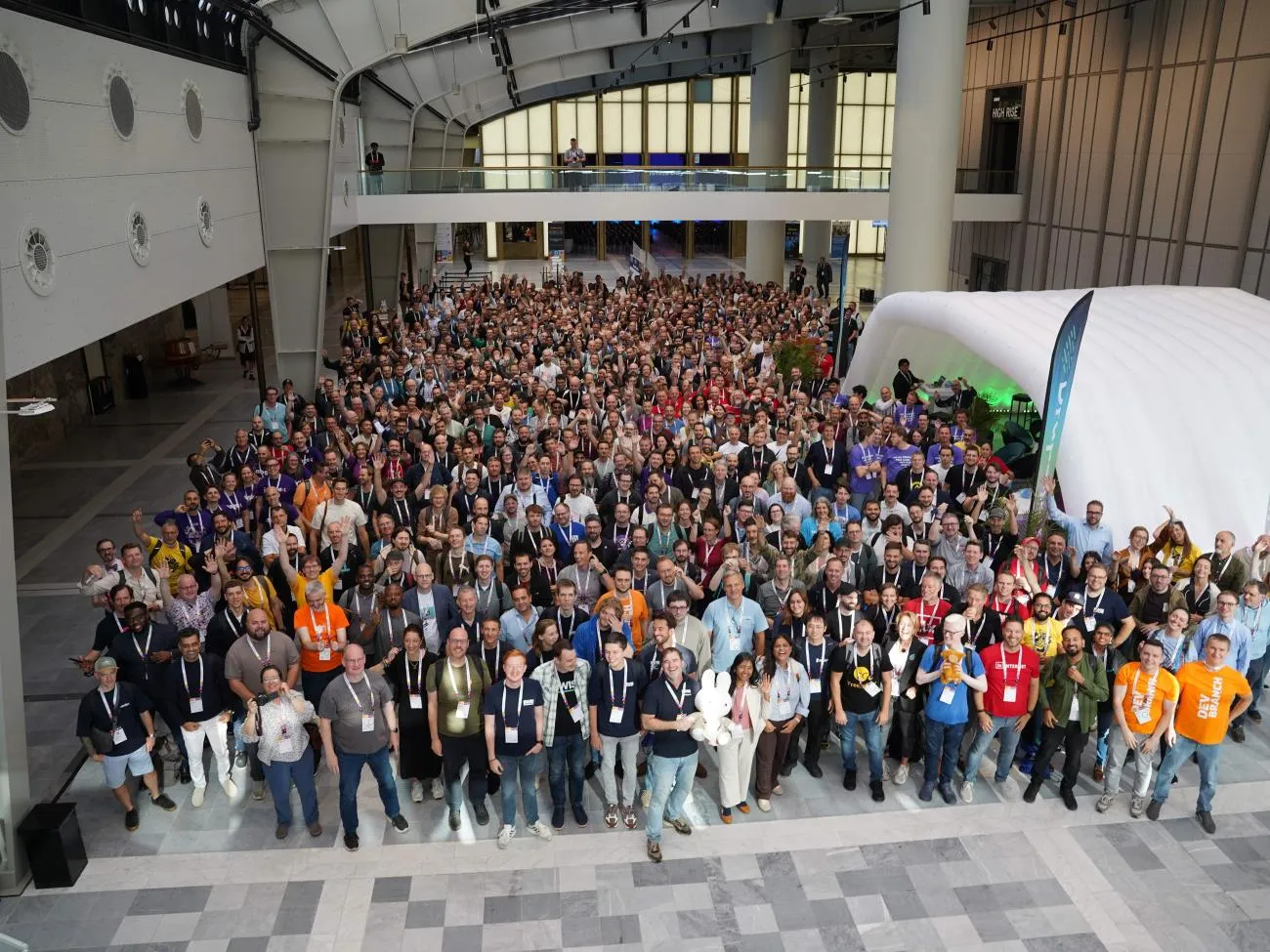
From 28 September to 1 October 2026, the European Drupal community gathered at the World Trade Center in Rotterdam for DrupalCon Europe. I was there, and I wanted to share what I took away: the announcements from Dries Buytaert’s keynote and what they concretely change for developers.
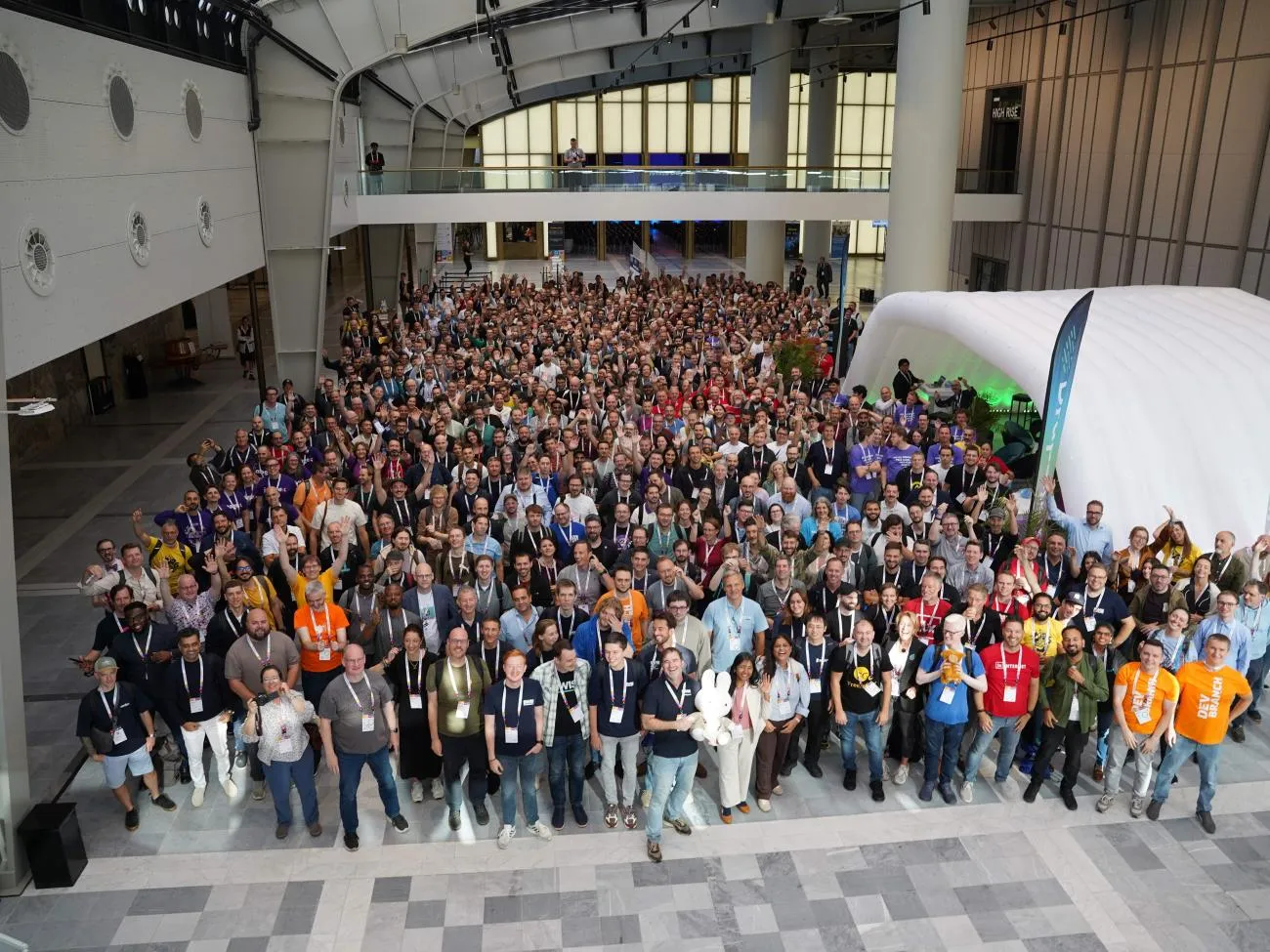 The traditional group photo, in the WTC Rotterdam hall. Photo: events.drupal.org
The keynote of 29 September had one central idea: technically, Drupal has made huge progress, but its reputation hasn’t kept up. Many decision-makers still see Drupal as a complex CMS reserved for large projects. Dries named this reputation gap as the project’s main challenge, and many of the announcements aim to close it.
Two years after Starshot was launched, the results are concrete: Drupal CMS, recipes, site templates, Drupal Canvas and AI tools have all shipped. Four focus areas were highlighted:
This was the demo that spoke to me most as a developer. Today, connecting an AI assistant to a Drupal site goes through a recipe combining Simple OAuth, MCP Server and the Tool module. Dries showed the example of his photo album module: exposing all its features to an AI assistant takes about 1,000 lines of code.
A research prototype built with Matt Glaman brings that down to about twenty PHP attributes on existing code. The idea: describe a capability once, and make it available to AI assistants, ECA workflows, JavaScript components and people alike.
To turn this prototype into a roadmap, a Rosetta Sprint was announced: four days of work between key maintainers. The date and location are still to be announced.
It is only a prototype, not a shipped feature. But the direction is clear, and consistent with how core has been evolving: PHP attributes are gradually replacing annotations, hooks are becoming class methods. Describe once, use everywhere is exactly what Drupal was missing to become “readable” by agents.
Dries also talked about his contribution to the European Commission’s consultation on digital sovereignty, which was cited in the resulting official recommendation. He proposed the idea of “Stewarded Open Source”: open source projects that provide long-term maintenance, security releases and real community governance. His message: Europe needs Drupal, and Drupal needs Europe.
To close the reputation gap, the Drupal Association is launching a Drupal Advocacy Program (as a pilot). It awards contribution credit for work that helps people discover Drupal: tutorials, recorded demos, translations, amplifying other people’s talks. Each quarter, a focus theme earns double credit. Contributions are submitted at drupal.org/advocacy.
Dries closed with the Rotterdam Pilot: a challenge to every attendee to carry the conference’s energy outside the venue. Share what you learned, amplify talks, write about other people’s sessions and credit them.
This article is my answer to that challenge.
Canvas becomes a serious option for European projects. Without multilingual support, Canvas was hard to recommend in France, Belgium or Switzerland. That blocker is gone. You still need to master the lifecycle of components and their configuration (I wrote about it in my article on exporting config after changing props), but the direction is right.
Modern front-end skills become a direct asset on Drupal. React code components and five supported headless frameworks mean a React or Angular developer can contribute to a Drupal project without going through Twig first.
AI in Drupal is designed with a human in the loop. This is what reassures me most: in the Northmoor demo, no generated content is published without human review, and the assistant declines to answer when it can’t find the answer on the site. That is exactly what institutional clients ask for.
MCP will change how we design our modules. If describing capabilities with PHP attributes pans out, cleanly exposing a module’s capabilities will become a best practice, just like writing tests. I’ll be following the Rosetta Sprint closely.
Between sessions, I had the chance to meet Dries Buytaert, the founder of Drupal. Talking for a few minutes with the person who started the project more than twenty years ago, surrounded by contributors from all over Europe, is a moment that stays with you.
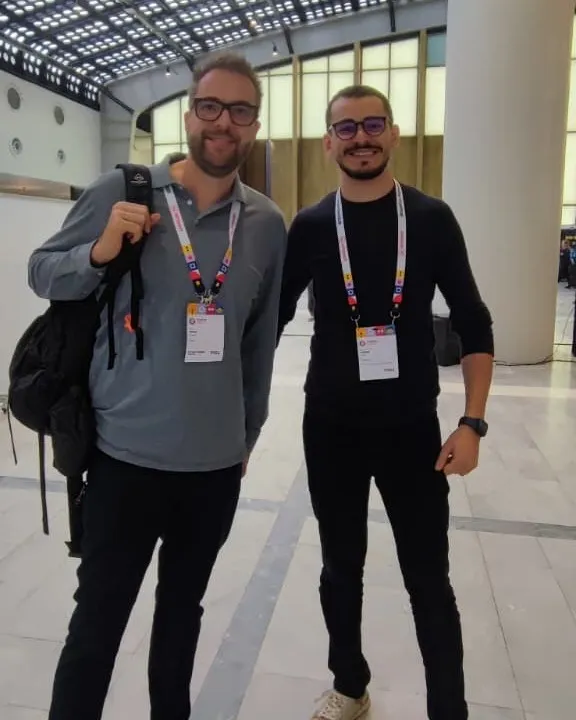 With Dries Buytaert (left), founder of Drupal, at DrupalCon Rotterdam 2026.
DrupalCon Rotterdam confirmed one thing: the product is ready, and the main job now is to let the world know. Multilingual Canvas, React, headless, AI with guardrails, MCP: Drupal has strong arguments against competing CMSs. It’s up to us, developers and agencies, to carry them beyond the community.
See you at the next DrupalCon!
Sources: DriesNote Rotterdam: Drupal is light-years ahead of its reputation and Drupal AI after the DriesNote Rotterdam on drupal.org.